The Physical AI Curriculum
Your Path Into Physical AI.
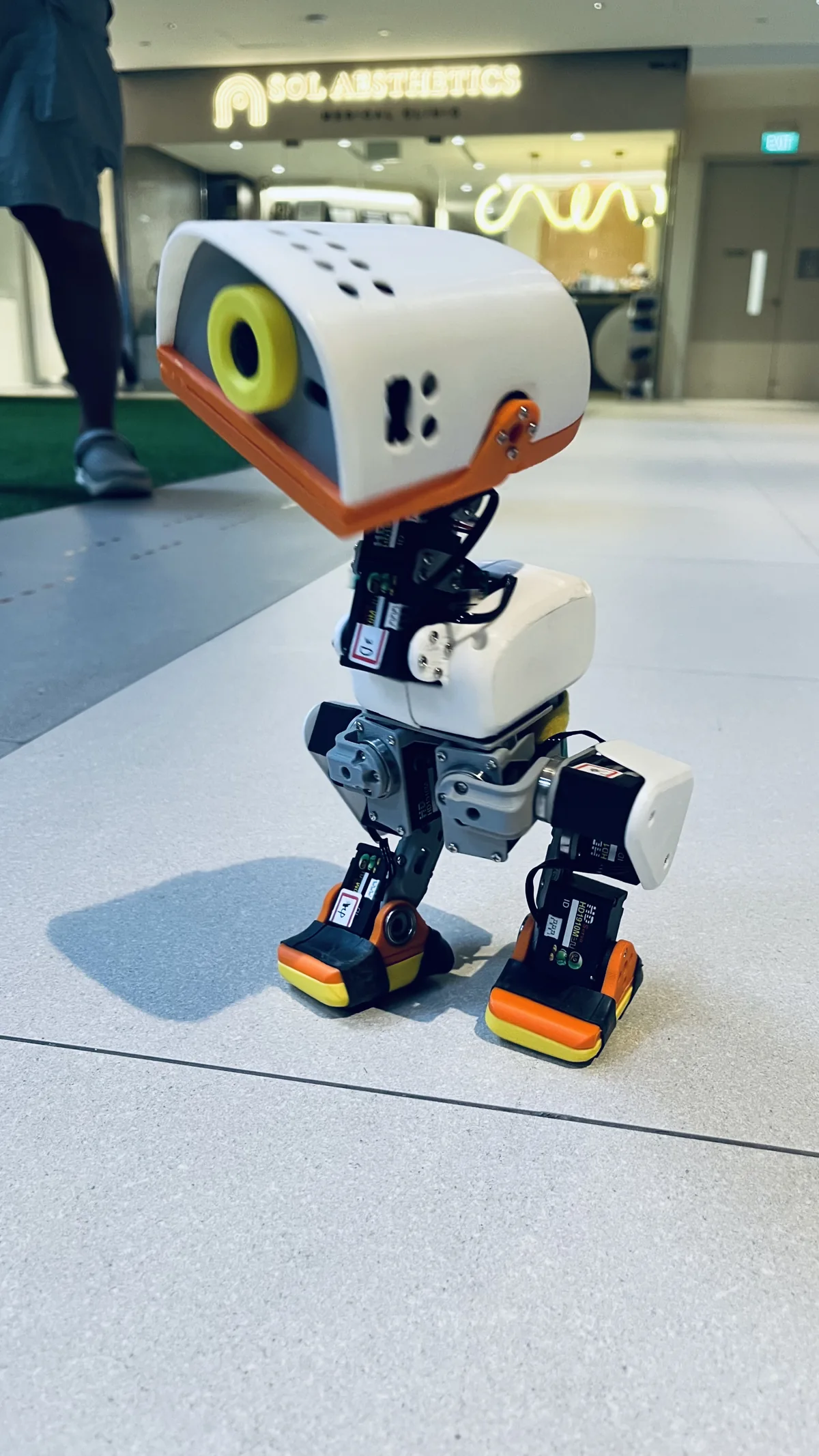
Build your robot, give it a voice and vision, and teach it to navigate. Bring everything together in your own project, then showcase your creation and pitch its value to an audience.
Five Connected ModulesOne Companion Robot
Module 01 · 4 Sessions · 2 Hours per Session
Robotics Engineering
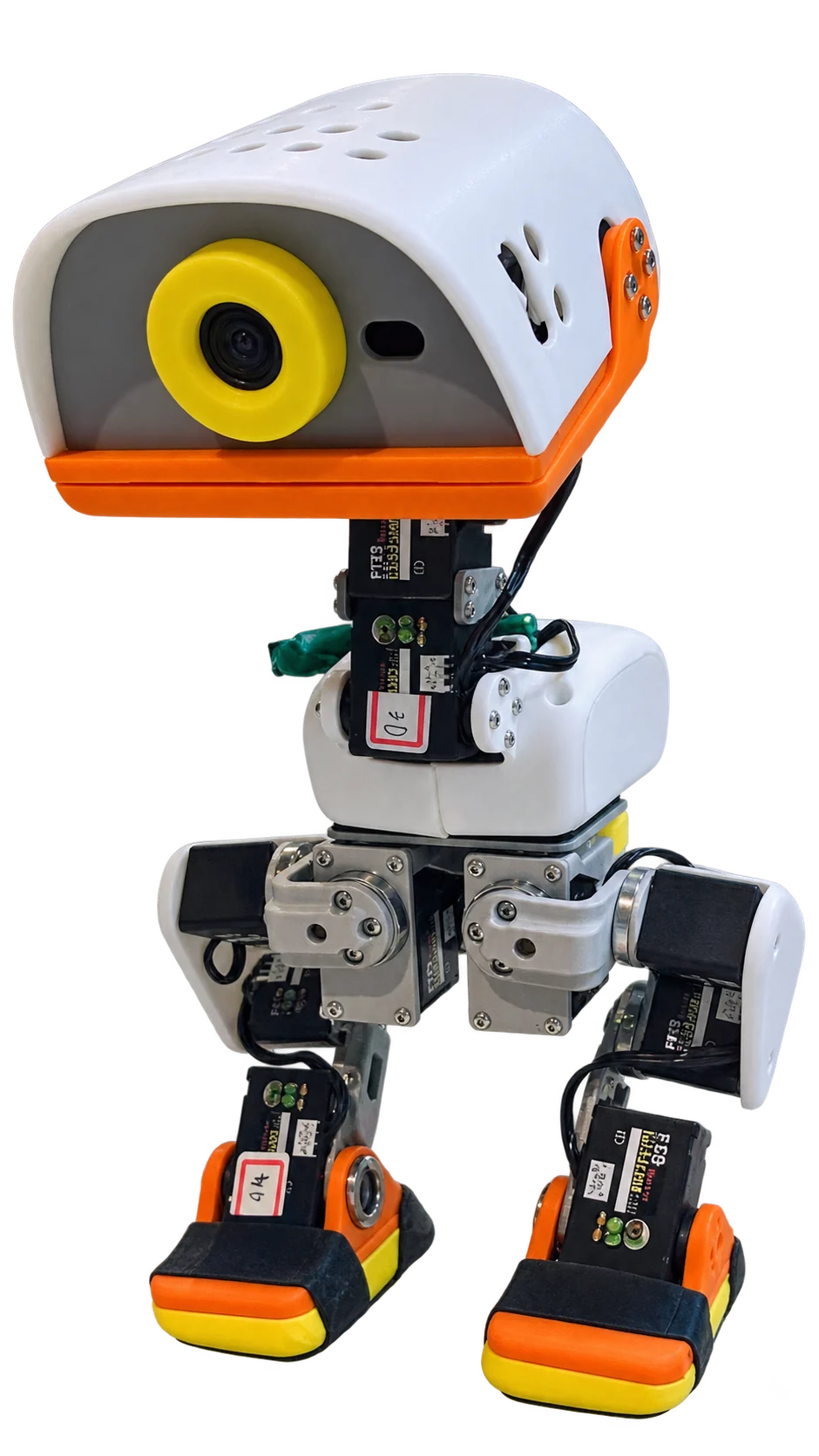
Assemble your MicroDuck, calibrate its movement and compete in a remote-control race.
Identify Components, Configure Servos & Test Wiring
Assemble the Legs, Body, Neck & Head
Calibrate Movement & Practise Remote Control
Test Your Route & Compete on Race Day
Learning Outcomes
Take home a fully assembled, calibrated MicroDuck. Learn to connect components, check mechanical joints, troubleshoot movement, and navigate a timed obstacle course.
Skills
- Mechanical Assembly & Wiring
- Actuator & Balance Calibration
- Teleoperation
- Engineering Tests
Module 02 · 6 Sessions · 2 Hours per Session
LLM & AI Chat
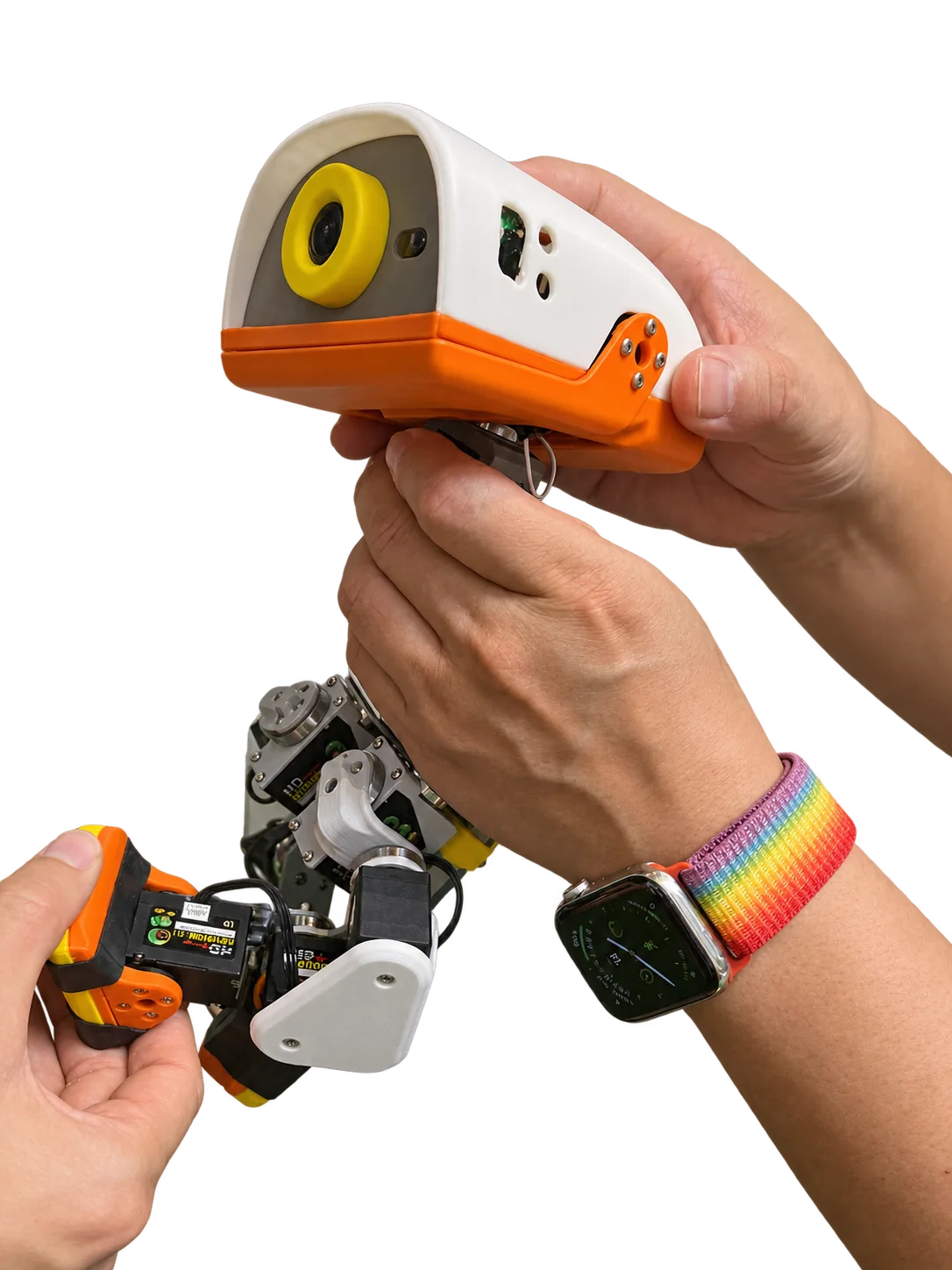
Give your MicroDuck a voice you can design and behaviours you can program.
Trace the Voice Signal from Microphone to Speaker
Make MicroDuck Answer Questions with an LLM API
Tune Speech Recognition & Design MicroDuck’s Voice
Program Spoken Commands to Trigger Actions
Animate MicroDuck as It Speaks
Customise Personality & Add Conversation Memory
Learning Outcomes
Build a MicroDuck that speaks, follows supported voice commands and remembers a saved preference. Use speaking styles, programmed sound effects and gestures to give it character.
Skills
- LLM APIs & Model Integration
- Speech Recognition & Voice Design
- Voice Commands & Gesture Timing
- Personality & Conversation Memory
Module 03 · 6 Sessions · 2 Hours per Session
Computer Vision
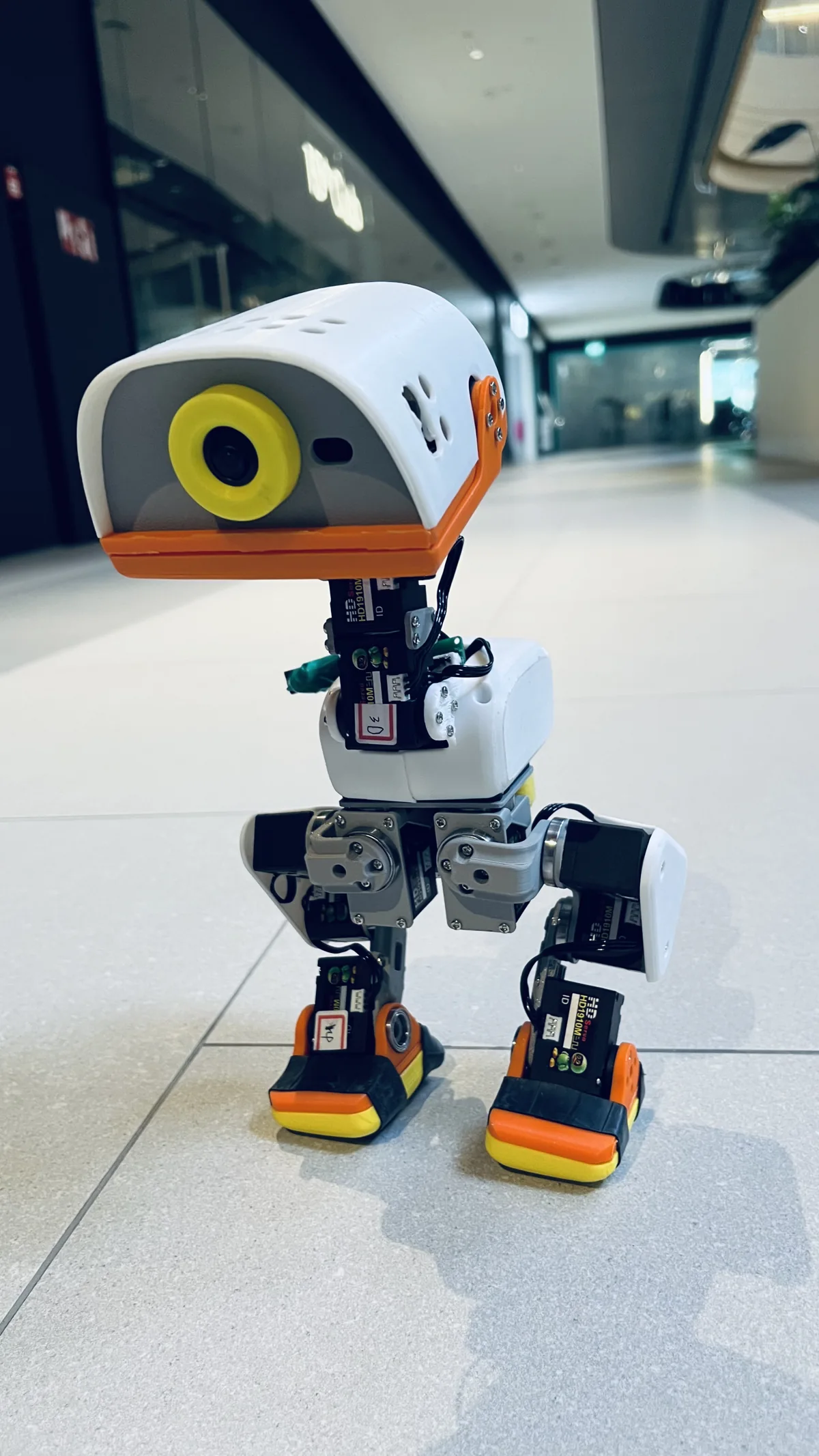
Teach your MicroDuck to recognise objects and respond to what it sees.
Capture & Inspect Camera Images
Identify & Locate Objects
Train & Test a Simple Image Classifier
Recognise a Familiar Face or Badge
Turn Recognition into a Greeting
Test Recognition in Different Conditions
Learning Outcomes
Train a simple classifier and see how lighting, angle and distance affect recognition. Use a familiar face or badge to trigger a personalised greeting.
Skills
- Camera Input & Image Processing
- Object Detection & Classification
- Face & Badge Recognition
- Vision Testing & Integration
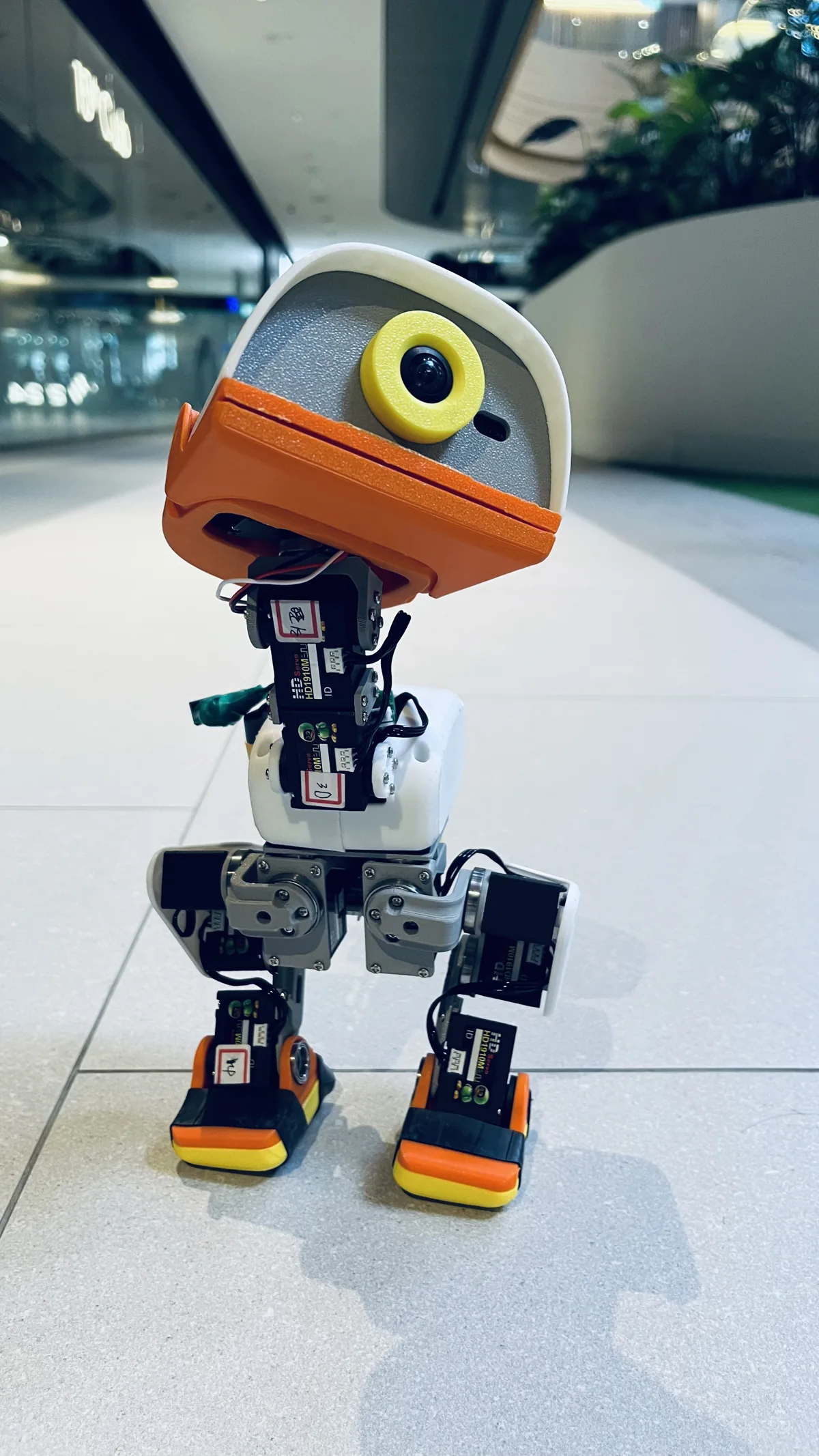
Module 04 · 4 Sessions · 2 Hours per Session
Obstacle Avoidance & Target Approach
Use your MicroDuck’s camera and distance sensor to guide it through a classroom obstacle course.
Measure Distance & Explore Sensor Coverage
Program a Reliable Stop
Detect Obstacles & Test a Detour
Approach a Visible Target
Learning Outcomes
Program your MicroDuck to approach a marked target, stop at a measured distance and take a tested detour around an obstacle.
Skills
- Distance Sensing
- Movement & Stop Control
- Obstacle Avoidance
- Camera Guidance
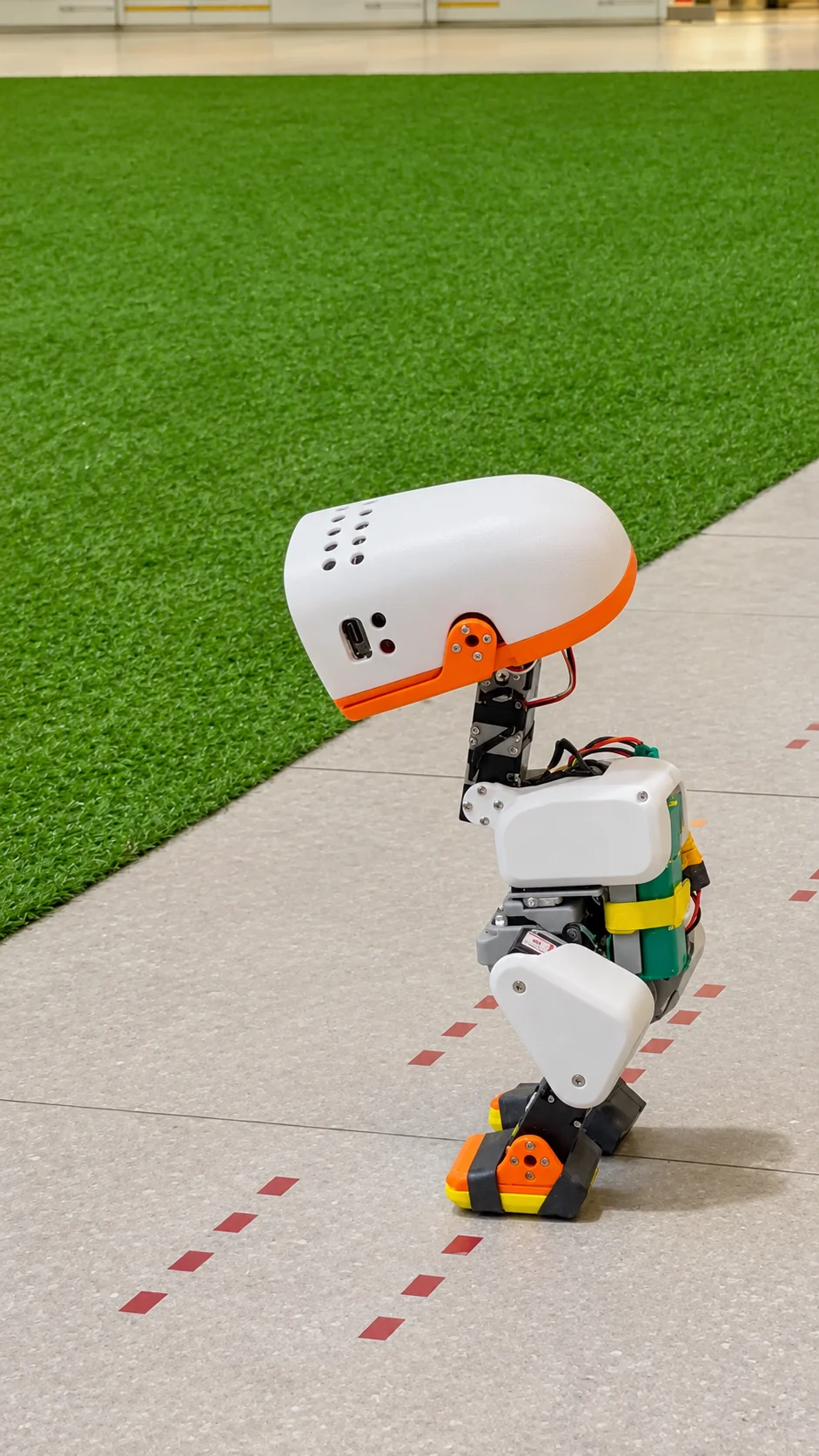
Module 05 · 6 Sessions · 2 Hours per Session
Robot Motion & Creative AI Showcase
Take a robot project from your first idea to a live showcase.
Design a Movement & Define Success
Choreograph a Routine with Tested Moves
Train a Movement in Simulation
Test Balance & Repeatability
Add a Voice or Vision Cue & Rehearse
Demo Your Robot & Pitch Its Value
Learning Outcomes
Train and test a new movement in simulation, then build a live MicroDuck demo using tested moves. Pitch your project to an audience and explain who it’s for, what it offers and what your tests showed.
Skills
- Motion Design & Sequencing
- Simulation & Motion Training
- Testing & Integration
- Demonstration & Product Pitching